So I already explained that my goal for the summer was to
improve my skills at using a commercial pattern. I still think it is far easier to use clothes hanging in my closet than purchasing a commercial pattern to make clothes, but my skills have improved and so I thought I would share the tips I learned so far:
1.
Trace commercial patterns rather than cut your patterns. Use freezer paper (or butcher paper) found in your grocery store to trace sewing and quilting patterns rather than cutting the commercial pattern paper. For more durable patterns you may reuse, consider purchasing a transparent, tear-resistant cloth such as Kwik Trace,
Swedish tracing paper
or a lightweight nonfusible interfacing. Tracing patterns allows you to reuse patterns again. The ability to reuse patterns is very important if the pattern does not fit well, if you want to be able to reuse the pattern to make the item for another person or if you are sewing for growing children.
2.
Use transfer paper (
Clover
or Saral, in
red, blue
blue
or
white
) to trace darts on your cloth so the darts are placed with precision. Tracing the instructions directly onto the wrong side of the fabric is far easier than cutting notches, etc. Precision makes a better garment and it is easier to be precise when using tracing and a pencil.
3.
Take advantage of multi-size patterns to craft your own size. Are you pear shaped? Use a smaller size on the top than on the bottom and adjust the pattern. Are you an upside down triangle? Do the reverse, use a smaller size on the bottom and adjust the top. Trace your adjustments using transfer paper to a lightweight cloth to test your self designed patter.
4.
Use online resources. There is a rich sewing community anxious to share their experience with sewing specific patterns and sewing skills in general. Check
Pattern Review before you buy patterns and consult the notes on specific reviews to see how other sewers with similar builds made alterations and adaptations to the patterns to make it work.
5.
Use clothes that fit to check your pattern. Using a commercial pattern does not preclude using the clothes that hang in the closet as a pattern. Rather than draw the pattern from the clothes, using the clothes with a similar design as a reality check can save hours of time struggling to altering the pattern from scratch. Simple, but it took me a few failed projects to realize I can incorporate my success in free drafting to using commercial patterns. As my kids say, duh Mom!
6. Use the
pattern layout as a guide, not a bible. If you are cutting a small size, there may be a more cloth efficient pattern layout. Just be sure to cut items on the fold when specified.
7.
Read the instructions thoroughly before beginning the project... and
ask questions, when instructions are not clear. If you do not have a sewing mentor or a good fabric shop for inquiries, check online resources such as the message board on
Pattern Review or the comment section of your favorite sewing blogger.
8.
Beware the scissor elf. This little menace may not exist in your house, but properly cut patterns are critical to sewing success and the gosh, darn scissor elf can ruin even the best garments. The old adage holds true, measure twice and cut once.
9.
Make a muslin. Test patterns, especially if you plan to sew on expensive fabrics.... but take the test results with a grain of salt when you are using different types of fabric. That polyester weave you bought on sale for $1 a yard to use for muslins most likely will not drape the same as silk charmeuse.
10.
Don't be afraid of experimenting....but understand that certain instructions, like fabric recommendations, are made for a reason. Muslins are great places to experiment.
11.
Quilting cottons can be used for garment construction, but the weave for quilting cottons is often denser than the weave for cottons made for clothes. Yes, I know this is a hotly debated item in the sewing world and certain fabrics may make you echo Tim Gunn's complaint that an item is "home ecy." If you want to sew clothes using quilting cottons, select patterns that call for denim or use a pattern especially designed for clothes made with quilting cottons such as those offered by Kwik Sew. For example, try
Kwik Sew 3653 (Pieced Tie Front Jacket),
Kwik Sew 3564 (Dolman Sleeve Jacket)
,
Kwik Sew 3563 (Pieced Jackets), Kwik Sew 3872 (Dress) and Kwik Sew 3870 (Blouse). Patterns that list denim as a fabric option are often good choices for quilting cottons because the pattern requires a stiffer, denser weave fabric.
12.
Take notes on what works and what does not work with each pattern. Write your notes on the directions, package front or on a piece of paper you keep with the pattern. Each alteration brings a new lesson that can be incorporated into the next project, but you may need notes to jog your memory -- especially if you put the pattern or project aside between sewing sessions.
References
http://sewing.patternreview.com/
http://www.colettepatterns.com/how-to
http://www.threadsmagazine.com/tips-and-tricks
Pattern Recommendations for Quilting Cotton
Kwik Sew 3653 (Pieced Tie Front Jacket),
Kwik Sew 3564 (Dolman Sleeve Jacket),
Kwik Sew 3563 (Pieced Jackets),
Kwik Sew 3872 (Dress)
Kwik Sew 3870 (Blouse).
Kwik Sew 3545 (Bags)
,
Kwik Sew 3700 (Serged Bags)

 was one of the first patterns I used when I began my ready to waer fast. The pattern has the look and feel of the Fresh Produce and Lulu-B dresses I love. In my first versions, I found some nice cotton interlock on sale at my local Hancock Fabrics before it closed. The first dress was so comfy, I made a second in another fabric. When the two dresses became summer favorites, I bought more fabric to make fall versions with long sleeves. In further versions, I varied the length and I varied the neckline.

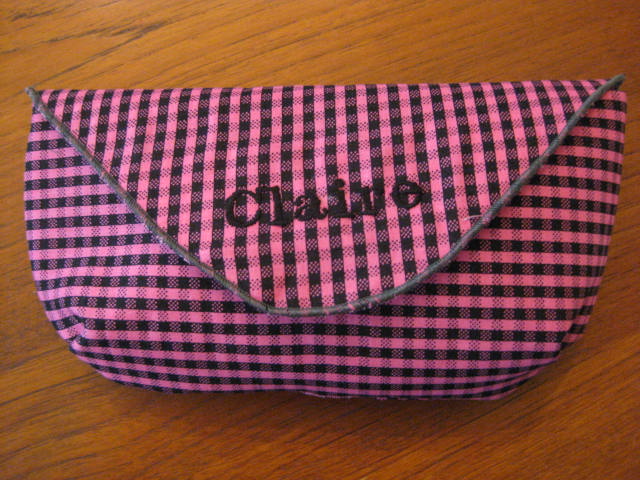
 to
to 
 before cutting the fabric. She cut the pattern while the machine embroidered and then asked me to take over so she could Skype. We were on a deadline as we needed the present for a party.
 . The pattern made a facing optional, but after discussing it, we opted to face both sides of the purse. I ironed the interfacing to the fabric.


 "; Leiasur Arts; 2006.
 "; Susan Breier; 2006.
 "; Emma Brennan; 2007.
 "; Lisa Lam; 2010.
 ; M'Liss Rae Hawley; 2008.

 3225. I am not sure how I feel about this dress. On the hanger, it looks really cute. I am very pleased with the decorative stitching I added to the yoke of the dress in lieu of top stitching.

 would fit the bill if I added to the length.
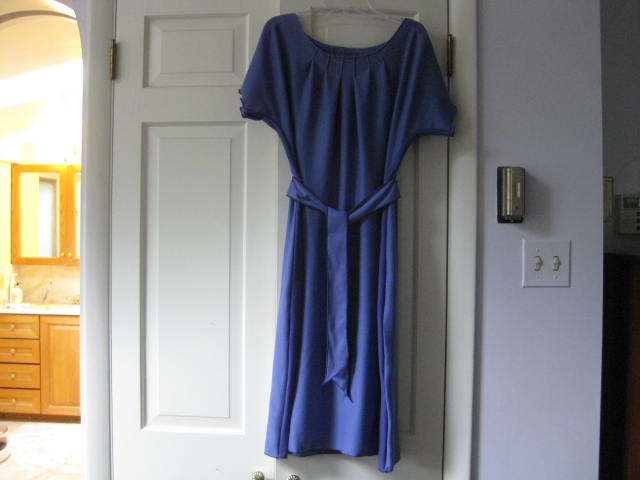
 , as altered
  fashion design philosophy. When my sister was studying fashion design in college, she had a professor that was even more specific. Her prof advised the students that there are two choices when confronted with a mistake: hide it or accentuate it. I was reminded of that advice as I worked on my most recent project.
 for the top and